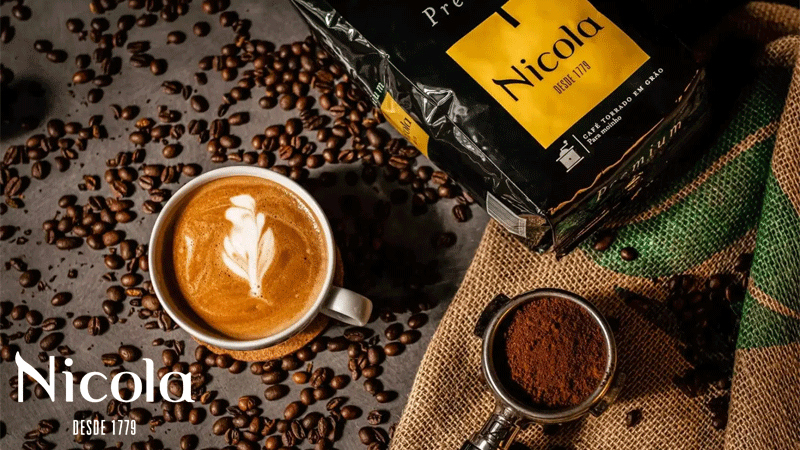
The Portuguese brand CAFÉ NICOLA® carries with it more than two centuries of history, culture and tradition, deeply rooted in Lisbon and in the distinctly Portuguese way of experiencing coffee as a moment for meeting, conversation and sharing. Its origins date back to 1779, at the emblematic Café Nicola in Rossio, a venue that became a meeting place for writers, artists, politicians and some of the capital’s most celebrated literary gatherings, with particular prominence given to Bocage, a figure who remains inseparable from the memory of the place. From its earliest days, the establishment had its own coffee blend, prepared from beans sourced from Brazil and São Tomé and Príncipe, building a distinctive identity that would go on to accompany the evolution of coffee-drinking habits in Portugal. Growing demand and the desire to ensure greater control over the different stages of production led, in 1950, to the creation of the Venda Nova factory, consolidating the brand’s journey and strengthening its presence in the national market. More than a coffee brand, the Portuguese brand CAFÉ NICOLA® represents a heritage shaped by conversations around the table, lingering encounters and small everyday rituals passed down through generations. Café Nicola in Rossio itself retains a strong sense of heritage, with architectural and decorative features that make it a landmark of Lisbon identity and one of the most distinctive Art Deco-inspired spaces in the Baixa district, a living testament to the city’s historic café culture. Today, this history continues to be renewed through different formats and consumer experiences, while keeping coffee at the heart of a ritual deeply rooted in Portuguese culture. Present in more than 25 countries across four continents, the brand takes beyond Portugal’s borders a distinctly Portuguese way of experiencing coffee, associated with conviviality, closeness and the pleasure of spending time around the table. From Rossio in 1779 to the tables of today, an identity that tastes of Portugal endures, shaped by memory, conviviality and continuity, and finding in coffee not merely a product, but a ritual of belonging and an expression of Portuguese culture.